ShopTalk 2026: Experience with the «Startup» Package
Some impressions from Shoptalk Europe in Barcelona this July — a major retail industry trade show where we (the founders) exhibited with our project, Smart Shelf AI. Sharing this in case it helps someone decide on next year's event or the fall edition in the US.
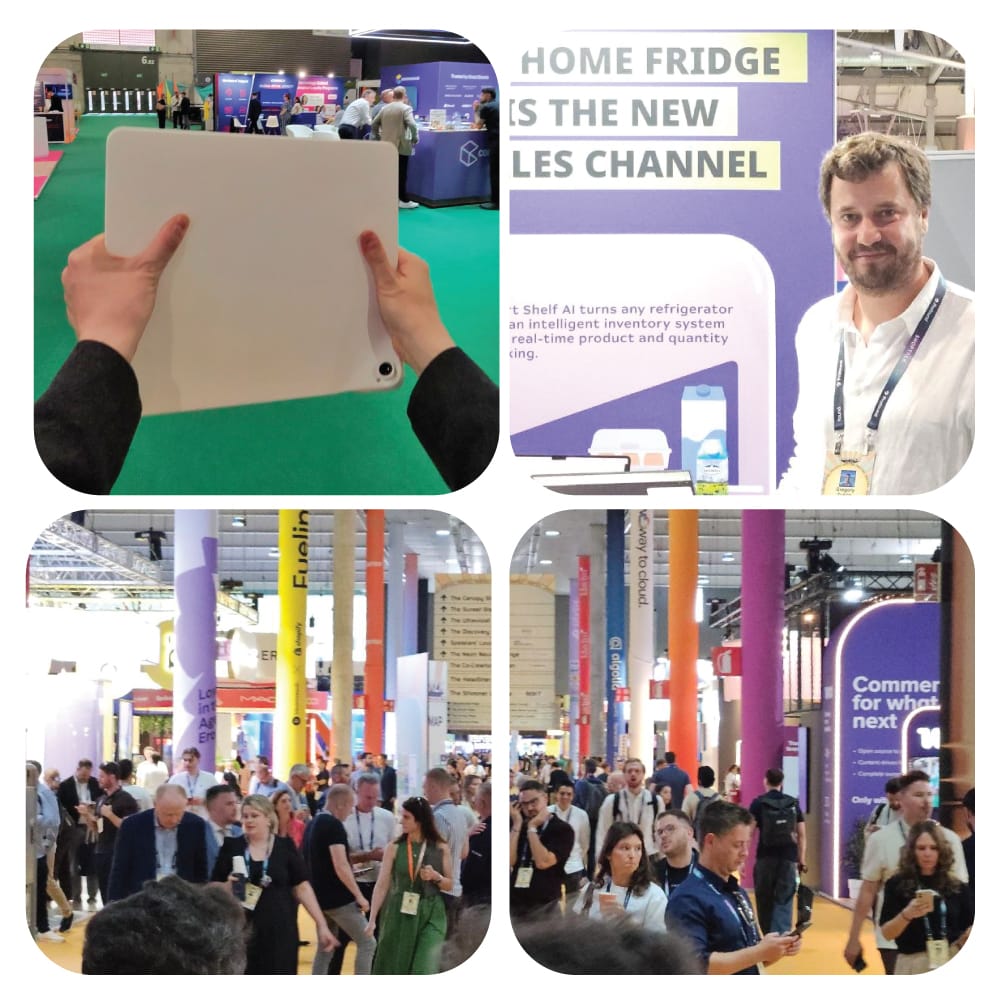
Some impressions from Shoptalk Europe in Barcelona this July — a major retail industry trade show where we (the founders) exhibited with our project, Smart Shelf AI. Sharing this in case it helps someone decide on next year's event or the fall edition in the US.
We went because we're looking for a retailer to run a pilot of our device. Tesco and two other companies showed interest and are still in touch after the event.
It's too early to talk about concrete results or ROI, so I'll focus on impressions instead.
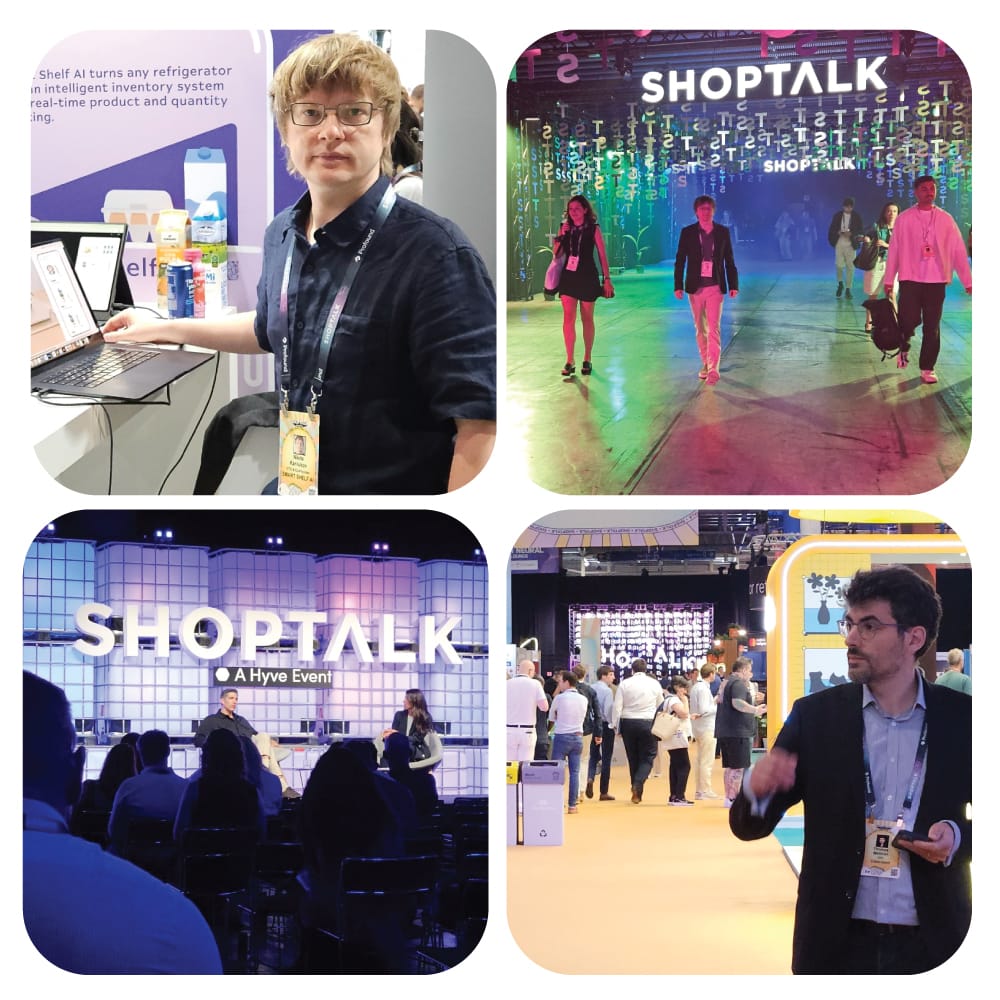
Startup booths cost €10–15K and more for bigger space, entry tickets run roughly €1–3K, and there are very few "random" visitors. The density of C-level attendees is high — among the guests you'll find founders as well as employees of large retail (or retail-adjacent) companies.
On the event platform, you select companies you're interested in, and if they "like" you back, a meeting is scheduled. Startups who signed up for the "startup" package get 5 meetings at negotiation tables with company representatives — who you meet is decided before the event, almost like a dating app: you like a brand's profile, and if they like you back, you match and meet. Everyone else you either have to "catch" at your booth or chase down between the aisles.
The startup corner was tucked away near the restrooms, far from the entrance, so it was more effective to go out and chase people down. We had a badge scanner to log contacts, and over three days we collected more than a hundred, including: Tesco, IKEA, Instacart, Lenovo, Honeywell, Adidas, Mondelez International, Bayer, Diageo, Nespresso, Mars Snacking, Arla Foods, Barilla, BIC, Leroy Merlin, Avery Dennison, TotalEnergies, EROSKI, Just Eat Takeaway.com, and others. Mastercard, NVIDIA, TikTok, and Google had large booths, but they were staffed by regular employees. Reaching decision-makers through them takes some talent — they're there to find retail clients themselves.
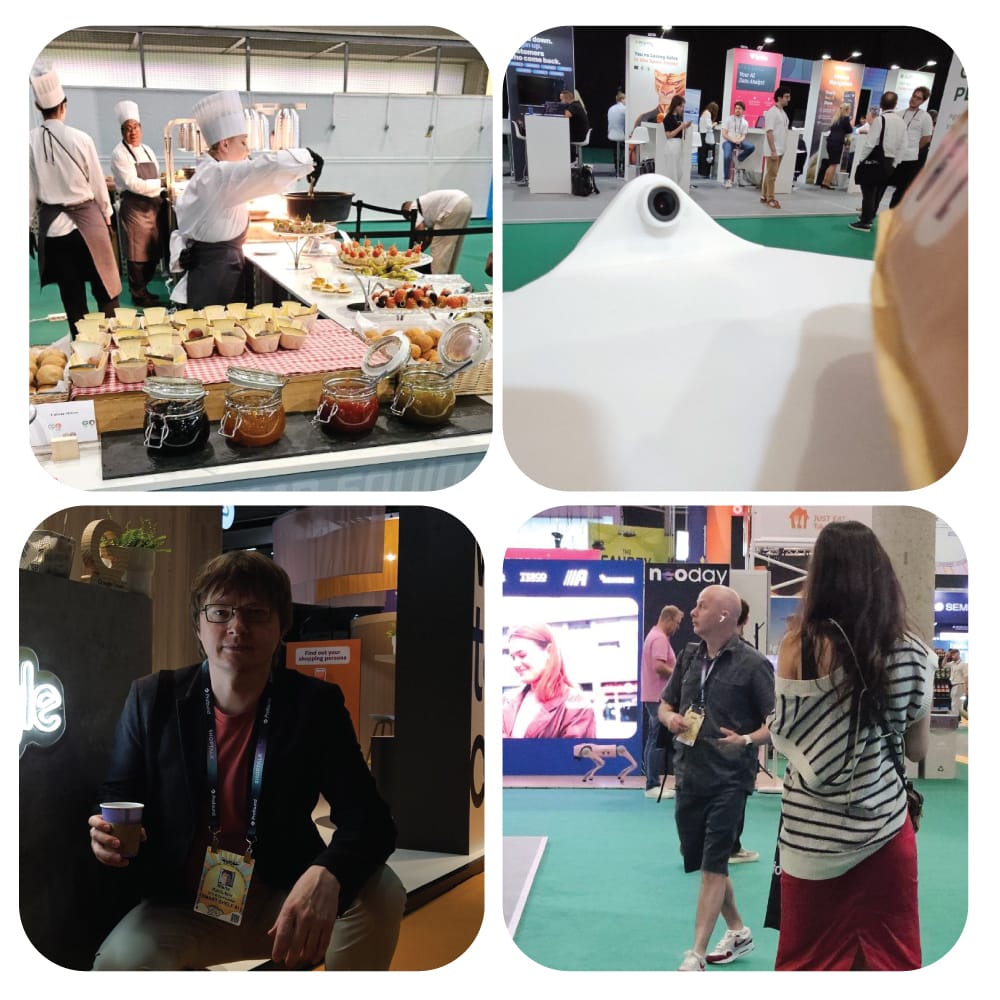
I calculated that a minute of time spent at the show is worth about €7, so I decided not to stay quiet for a second and to keep talking to someone the whole time — even on the way to get coffee. Especially at the coffee stands.
In conversations I asked people what pain points their company currently has and what they're looking for, rather than narrowing the conversation down to a pitch for my own project. That approach helped me "catch" some genuinely interesting people — for example, an innovation manager from Leroy Merlin talked about the difficulties of implementing RFID-tag-based inventory systems, since many of their products are metal and the tags simply don't work. That's actually one of the reasons RFID tags are so widely adopted at Decathlon (items are tagged at the factory) but not in general retail or home-improvement goods. The VP of Technology, Europe at Adidas said that plenty of AI tools have already been built, but they run into resistance specifically at the adoption stage — people don't understand or don't want to use new systems. The Senior Manager of Customer & Shopper Insight at Mars Snacking showed interest in our technology but said what he needs right now are point-of-sale solutions. Many people simply said, "everyone's adopting AI, and we'd like to as well, but we don't know where to start or how." All of this is interesting in its own right, and can offer insights for developing the project, pivoting, or simply feed into future decisions as a kind of research through expert interviews with people from the industry.
Some people had clearly just come to drink.
Champagne gets carried around the aisles, and there are free-food stations everywhere (well, "free" — it's baked into the ticket price). Badges show titles like innovation manager, director of this-or-that development. But access to these people depends entirely on your own enthusiasm and networking effort. Fewer people made it to our booth than we'd hoped, and away from the booth, not everyone wants to talk. One lucky fellow from Nespresso was clearly unhappy about being drawn into a conversation, while a lady from IKEA was glad to chat — especially since she'd missed two of her scheduled meeting-zone sessions (those same "5 meetings"), each of which the other side had paid €500 for.
I'll be able to write about how effective these contacts actually were in a few months, once we have more clarity on traction with Tesco. The conversion probability looks higher than cold outreach — before the show we sent 2,000 emails to retailers and didn't get a single reply.
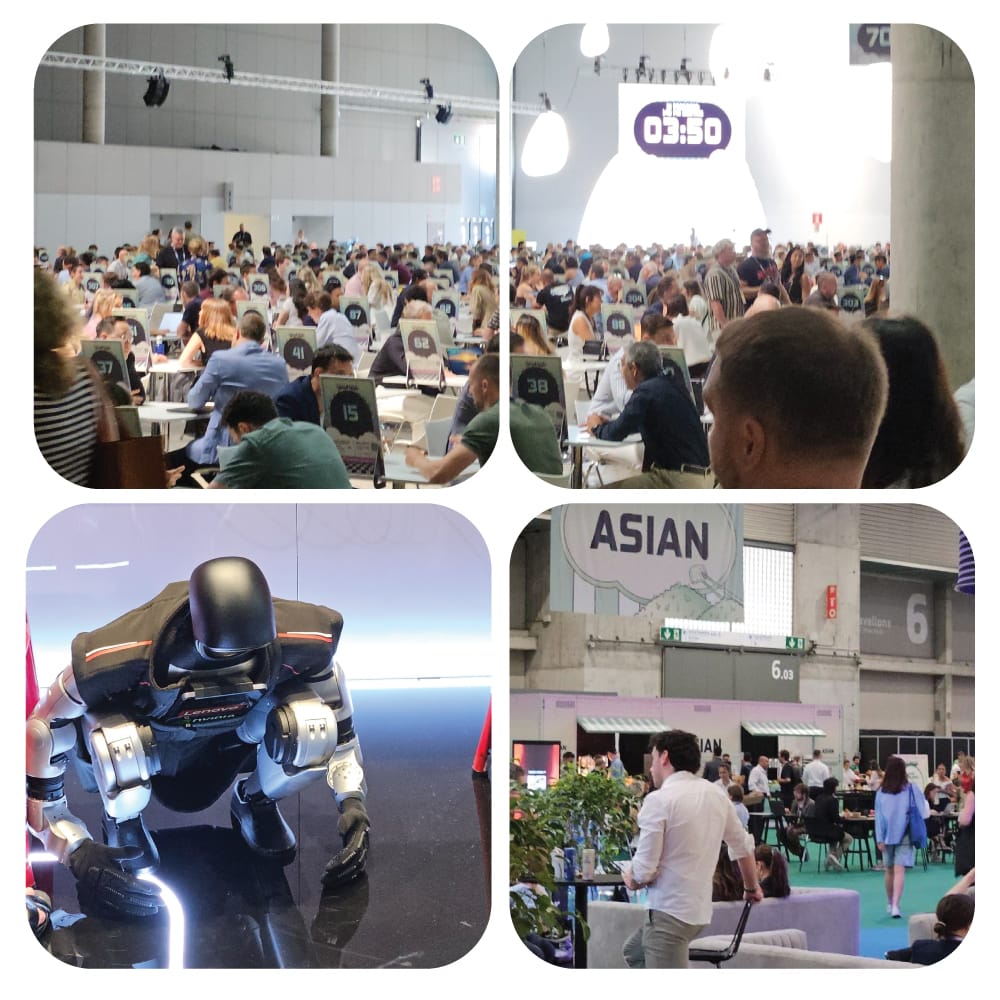
The startup zone was mostly SaaS companies with various AI bots for retail platforms. Aside from us, there were only a couple of hardware companies. Visitors came from a range of countries: the US, UK, France, Spain, Italy, Latvia, Lithuania, Ukraine, China. Everyone spoke English, including the talks.
The rest was the usual conference fare — a photo with a robot, listening to talks, grabbing a branded tote bag, posting on LinkedIn.
Overall, it's a fun event, and the odds of a good contact go up a lot if the brand has already agreed to talk before the show.
A few practical tips:
- Don't buy the local internet package for €150 — you can bring a WiFi router with a SIM card instead, but clear it with the organizers in advance. If you need high speed, though, a local wired or WiFi connection is a better bet.
- Don't rent a screen — it blocks your banner, and it costs €400 anyway. You can buy and bring your own portable screen for around €200 and it'll be just as good. Also, you're allowed to leave your things and equipment overnight.
- A badge scanner is worth getting — it's an app/website that builds a contact database from the badges you scan at the event. You can attach notes, audio recordings, or photos to each contact, which is handy so you don't forget what you talked about.
- The busiest day is the second one. The third day runs only until 4pm, and many people leave even earlier.
- You can pick up your badge the day before the event — not required, but there were no lines.
- The food is good, so you can skip breakfast.
- There's a talk-submission track you can apply for in advance if you have something to present — worth a try. There are also panel discussions.
- You don't have to attend the talks — the app has AI-generated summaries of every talk from the audio transcripts — but sitting next to someone is a good excuse to network. You can even scope out who you want to meet by badge and "accidentally" sit next to them.
- Most people (something like 29 out of 30) are happy to talk. Don't overthink how to start — just walk up and ask if they're enjoying the show, where the coffee is better, whether it's their first time here, which talks were good, or ask about their own project. Ordinary small talk keeps things low-pressure, and people usually ask about your project on their own.
Bottom line:
- If you're not sure why you're going or which companies you're looking for — don't go.
- If your project is still at the idea/prototype stage, it might not be worth the trip. If you have a reasonably mature product, it's worth pitching people from large retail (and other) companies — anecdotally, about 5% of attendees find what they came for.
- If you just want to talk to people in the industry and see what's out there, it's a good venue. Showing up and silently wandering the aisles isn't effective, and it's expensive.
- If you do go, study the attendee list carefully and put together an individual pitch for each person you reach out to, explaining specifically why your product solves their problem.
- Attending gives you a kind of "social proof" that your project is alive, shows up in relevant Google searches, and gives you a reason to talk — like we're doing right now.
Wishing you success with your own ventures,
Nikita Kaniukov
Technical co-founder, Smart Shelf AI
P.S. — a few facts, for context:
Shoptalk Europe is the largest retail and retail-tech conference in Europe, the European counterpart to the US Shoptalk event (running since 2016). It brings together senior executives from retailers, brands, technology companies, and investors to discuss the future of shopping, e-commerce, and retail-tech solutions.
Key 2026 figures:
- Dates and venue: three days at Fira Gran Via in Barcelona, Spain
- Attendees: 4,500+ attendees from 62 countries, roughly one in three at C-suite level
- Companies: representatives from 600+ retailers and consumer brands, including Adidas, Nike, L'Oréal, Nestlé, Unilever, PepsiCo, H&M Group, and others
- Speakers: 160+ industry leaders (some sources put the number at 180+)
- Exhibitors: 400+ technology companies showcasing their solutions
Upcoming Shoptalk events:
- Groceryshop: September 22–24, 2026
- Shoptalk Fall: September 29 – October 1, 2026
- Shoptalk Luxe: February 2–4, 2027
- Shoptalk Spring: March 22–24, 2027